Currently Empty: £0.00
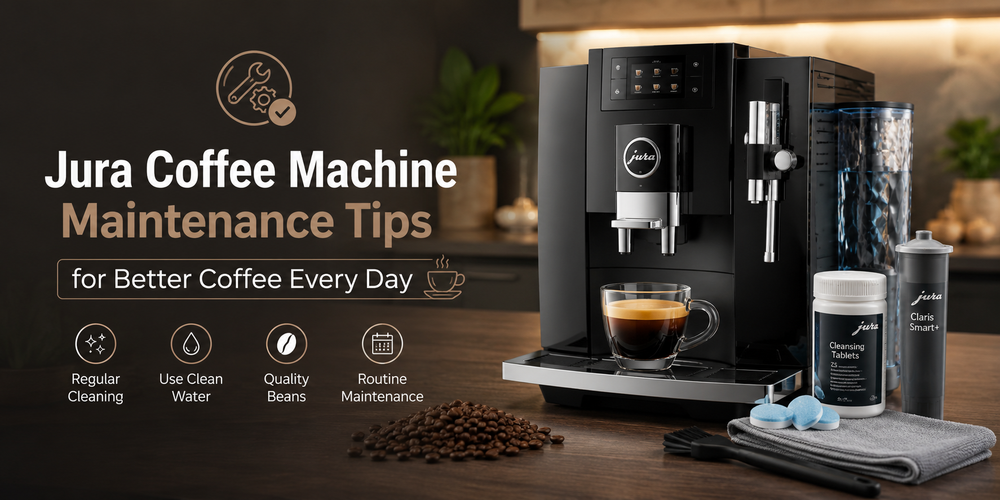
There’s something weirdly satisfying about that first sip of a well brewed espresso from a Jura machine—rich crema, steady flavor, and a temperature that feels “always right” every single time. But of course, that kind of quality doesn’t just show up on its own. It’s built from precision engineering and then honestly, some regular care. So if you’ve recently decided to buy a Jura coffee machine online, or you’re stuck comparing choices like the Buy Jura Giga X3 Generation 2 Online, it helps to know that maintenance matters just as much as picking the model. In this blog, we’re going to run through six practical maintenance tips that are easy to follow, and they’ll keep your Jura doing its thing for years, not just a few months.
Why Regular Maintenance Matters
Jura machines depend on tightly engineered parts—grinders, brew groups, thermoblocks, and milk frothers —all working together to pull the best flavour from your beans. Over time, mineral deposits from water, coffee oils, and milk residue start piling up inside. If you leave it alone, that buildup can change the taste, clog internal pathways, and can even nudge your machine toward an earlier “goodbye” than you planned. It’s not only about being clean, it protects performance too, and it protects the money you spent on the machine.
Descale on Schedule, Not When You Remember
Descaling removes limescale buildup from hard water, which is one of the biggest long-term threats to the inside of your Jura. Most Jura models show you a built-in indicator when it’s time, so don’t ignore that little reminder. If you keep skipping descaling, you may notice slower brewing, uneven temperature, and sometimes even expensive repairs. Use Jura’s official descaling tablets, not random replacements, because they’re made to work with the machine’s internal setup.
Give the Brew Group a Weekly Rinse
The brew group is basically where the real extraction happens, so it deserves real attention. On many Jura models you can remove it for a quick rinse under running water. Doing this weekly keeps coffee oils from stacking up and turning rancid, which otherwise can leave a flat, stale aftertaste in your espresso. Don’t use soap—plain water is fine, and the brew group should be fully dry before it goes back in.
Clean the Milk System After Every Use
If your machine uses an automatic milk frother, this is the area that needs the most frequent care. Milk residue dries fast, and it can block the tiny nozzles, which then leads to weak foam or buildup you don’t want hanging around. Run the machine’s automatic rinse cycle after each drink, and then take the frother apart for a deeper clean once a week. This one habit tends to make the biggest difference in how consistent your lattes and cappuccinos taste day after day.
Don’t Overlook the Water You’re Using
Water quality plays a bigger role than most people think. Using a Claris water filter lowers limescale formation and helps remove chlorine taste, too, so you’ll often go longer between descaling cycles. Swapping the filter every two to three months, or whenever the machine nudges you, is one of the simplest long-run protections for internal parts. This matters a lot if you’re looking at feature-heavy models, so if you’re considering options like the Buy Jura WE6 online, a steady filtration routine helps preserve the more advanced brewing engineering those models use.
Empty and Rinse the Drip Tray and Grounds Container Daily
Easy to forget, but they collect moisture and coffee residue. If you don’t deal with it, you can end up with odors, or worse, mold. A quick daily rinse takes like a minute, and it keeps everything feeling hygienic without being a chore.
Run the Machine’s Auto-Clean Program Regularly
Jura machines come with a built-in cleaning program that flushes the internal brewing system using a specialized tablet. Run it when the machine prompts you—usually every couple hundred cups. That helps keep internal channels free from oil residue and bacteria, so your coffee tastes better and the machine stays healthier over time.
Signs Your Jura Machine Needs Attention
- Unusual grinding sounds
- Slower-than-normal brew time
- Weak or uneven milk froth
- Ongoing error messages or blinking lights
- A stale, metallic taste in your coffee
Catching these early usually means a simple fix, not an expensive repair.
Conclusion
A properly maintained Jura coffee machine for sale rewards you with consistently great coffee and years of dependable performance. Those small daily routines—rinsing the milk system, emptying the drip tray, descaling on time—go a long way to protecting the precision engineering inside every Jura model. And if you’re thinking about upgrading, or adding a second machine to your setup, it’s smart to check current options first. For genuine machines, accessories, and straightforward advice on picking or maintaining the right model, dipacicoffeemachine.com is a solid place to begin.
FAQs
- How often should I scale my Jura coffee machine?
Most models prompt you automatically, usually every 1–3 months, depending on your water hardness and how much you’re using it. - Can I use regular tap water in my Jura machine?
Yes, you can. Still, using a Claris water filter is suggested to cut limescale buildup and, honestly, make the flavor feel a bit cleaner. - Why is my milk frother producing weak foam?
Usually it’s a residue thing, often stuck in the nozzle. If you rinse after every single use and do a deep-clean weekly, it usually fixes it, or at least improves it a lot. - Is it okay to clean the brew group with soap?
No, soap can harm internal seals. Just rinse with plain water only. Then let it dry completely, before putting it back in again. - How long does a Jura machine usually last with good maintenance?
With regular care, a lot of Jura machines stay dependable for around 8–10 years, sometimes more, if you keep descaling and cleaning on track. - How do I know if my machine needs professional servicing?
If you notice odd noises, uneven brewing, or the same error messages again and again even after normal cleaning, then yeah it’s probably time for a pro check. - What’s the best way to store coffee beans?
Put them in an airtight container, away from heat and sunlight, and don’t overfill the hopper. A smaller window for freshness, that’s the whole point